
Book Your Free Consultation

Dr. Shalabh Agrawal earned his MBBS and M.S. in General Surgery from the esteemed Maulana Azad Medical College in New Delhi. He then advanced his education with super-specialty training in Urology (DNB - Urology/Genito-Urinary Surgery) at the Army Hospital, Research and Referral in Delhi Cantt, recognized as a leading medical institution within the Indian Armed Forces. Throughout his training, Dr. Agrawal had the opportunity to collaborate with some of the country's most distinguished urologists, acquiring significant expertise in the management of a diverse range of urological conditions.
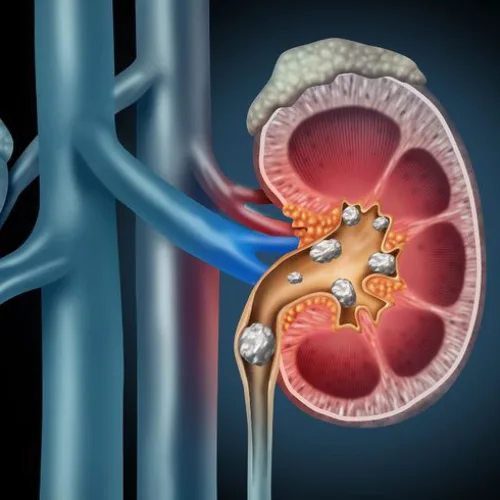
Kidney stone treatment is a vital part of urology, addressing one of the most common and painful urinary conditions. It involves precise diagnosis, effective treatment, and preventive care to ensure long-term urinary health.
Urologists use advanced diagnostics like ultrasound, CT scans, and urine analysis to assess stone size, location, and composition. Treatment is tailored based on these factors and the patient’s health needs. Small stones may pass naturally with medications and dietary changes, while Retrograde Intrarenal Surgery (RIRS) is the preferred minimally invasive method for moderate-sized stones. RIRS uses a flexible ureteroscope and laser lithotripsy to break stones into tiny fragments for easy removal, requiring no incisions.
For larger or complex stones, Mini Percutaneous Nephrolithotomy (Mini-PCNL) is highly effective. This procedure involves a small back incision to directly remove stones under general anesthesia, ensuring faster recovery and minimal discomfort.
Beyond stone removal, modern treatment focuses on prevention through dietary guidance, hydration, and medications to minimize recurrence. With cutting-edge techniques like RIRS and Mini-PCNL


Kidney stones can be treated using various methods based on their size, location, and type. Common treatments include medication, extracorporeal shock wave lithotripsy (ESWL), Retrograde Intrarenal Surgery (RIRS), and Mini Percutaneous Nephrolithotomy (Mini-PCNL).
Retrograde Intrarenal Surgery (RIRS) is a minimally invasive procedure that uses a flexible ureteroscope to access and remove stones within the kidney. Laser energy is typically used to break the stones into smaller fragments, which are then removed or naturally passed.
Mini Percutaneous Nephrolithotomy (Mini-PCNL) is a keyhole surgery used to remove large kidney stones. It involves making a small incision in the back to directly access and extract the stones. Mini-PCNL is recommended for larger or complex stones that cannot be managed with other techniques.
RIRS is performed without any external incisions, using a ureteroscope to access the kidney via the urinary tract. Mini-PCNL, on the other hand, requires a small incision in the back to access the kidney directly. RIRS is ideal for smaller stones, while Mini-PCNL is preferred for larger stones.
Yes, both RIRS and Mini-PCNL are safe and effective procedures when performed by experienced urologists. They are minimally invasive, have shorter recovery times, and result in minimal complications compared to traditional open surgeries.
Recovery time varies based on individual health and the procedure. RIRS typically requires a few days of rest, while Mini-PCNL may involve a recovery period of 1-2 weeks. Most patients can resume normal activities shortly after these procedures.